
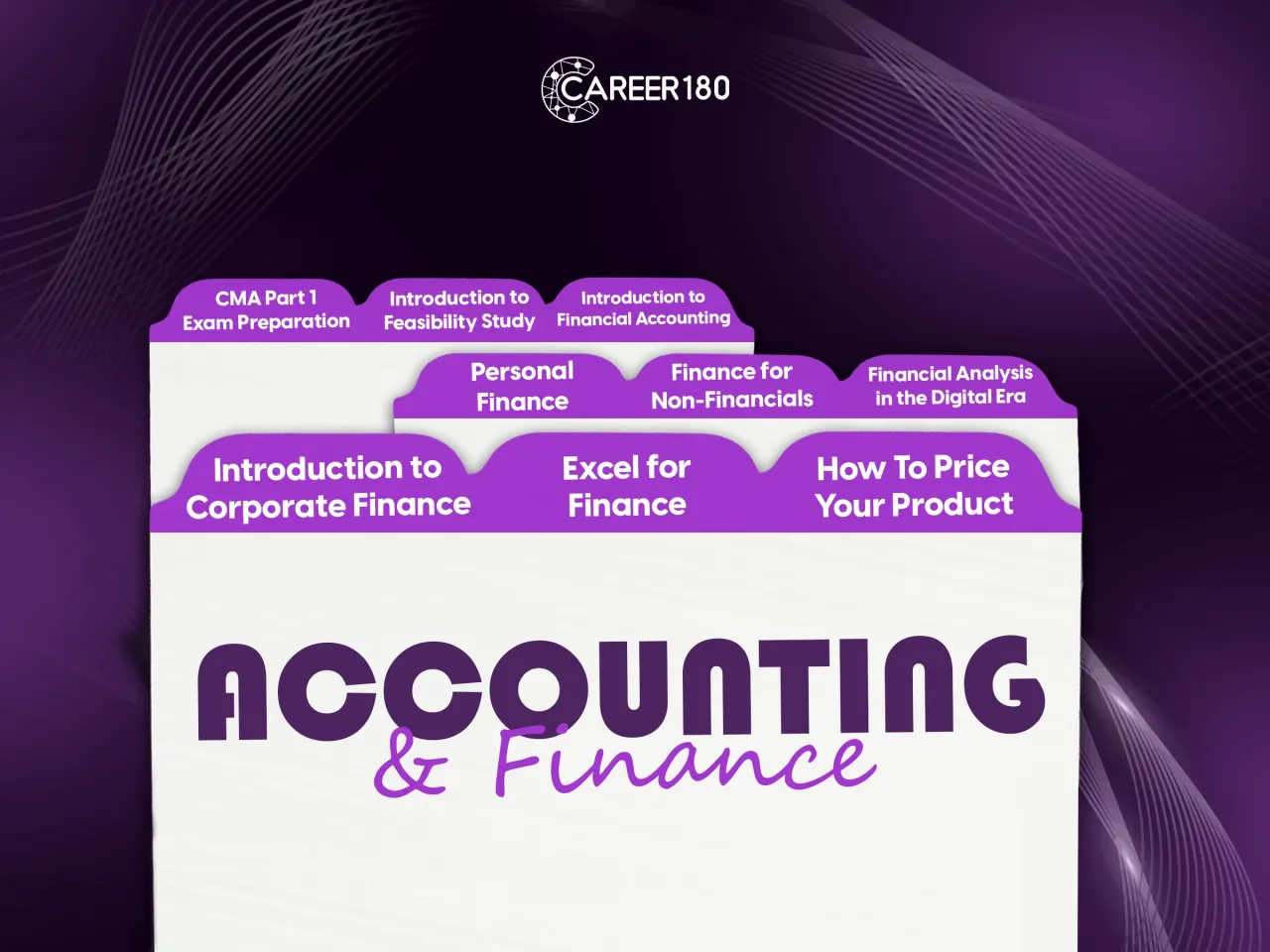
Accounting & Finance
How to Excel in the Accounting and Finance Field with Our Expertly Crafted Bundle of Recorded Courses
Master the core principles of accounting and finance and build a strong foundation for financial success with these comprehensive courses
- Introduction to Corporate Finance: Learn the fundamentals of managing a company’s financial resources and making strategic investment decisions.
- Excel for Finance: Master Excel tools and techniques for financial modeling, analysis, and efficient data management.
- How to Price Your Product: Discover strategies for setting competitive and profitable prices for your products or services.
- Personal Finance: Gain essential skills to manage personal budgets, savings, and investments effectively.
- Introduction to Financial Accounting: Understand the basics of preparing, analyzing, and interpreting financial statements.
- Finance for Non-Financials: Learn key financial concepts to make informed decisions without a financial background.
- CMA: Explore the Certified Management Accountant certification framework and its importance for advanced financial management.
- Introduction to Feasibility Study: Learn how to evaluate project viability and make informed business decisions.
- Financial Analysis in the Digital Era: Discover how to leverage digital tools and data analytics for modern financial analysis.

Course 1
1. Explore the duties of financial analysts.
2. Examine finance roles within corporate departments.
3. Investigate finance functions outside corporate settings.
4. Understand the responsibilities of accountants.
5. Focus on key aspects of business partner roles, accounting elements, planning, budgeting, costing, pricing, capital budgeting, business intelligence, and essential accounting certificates.
-
Intro
24 seconds -
Careers in Finance
5 minutes 44 seconds -
Finance in Corporates
6 minutes 54 seconds -
Finance Outside Corporates
7 minutes 18 seconds -
Careers in Accounting
10 minutes 12 seconds -
Business Partnership
5 minutes 21 seconds -
Elements to Consider in Accounting
7 minutes 20 seconds -
Planning and Budgeting
6 minutes 53 seconds -
Costing and Pricing
5 minutes 52 seconds -
Capital Budgeting and Cost of Capital
2 minutes 56 seconds -
Business Intelligence
2 minutes 50 seconds -
Qualifications and Certificates
6 minutes 29 seconds

Course 2
1. Distinguish between VLOOKUP and HLOOKUP functions.
2. Apply IFS conditions for effective decision-making.
3. Utilize AND and OR operators within IF statements.
4. Explore additional equations and formulas for financial analysis.
5. Master the use of pivot tables, pivot charts, and data visualization tools in Excel for financial modeling and analysis.
-
Intro
32 seconds -
Lookup
13 minutes 2 seconds -
IFS
13 minutes 42 seconds -
IF& AND& OR
8 minutes 54 seconds -
Count& Small& large Equations
6 minutes 1 second -
Other Formulas
13 minutes 20 seconds -
Excel Tools Part 1
9 minutes 39 seconds -
Excel Tools Part 2
9 minutes 44 seconds -
Financial Equations
12 minutes 6 seconds -
Equations of Feasibility Studies
10 minutes 57 seconds -
Application on Financial Model
5 minutes 45 seconds

Course 3
- Introduction to pricing strategies.
- Pros and cons of penetration strategy.
- Pros and cons of contribution pricing.
- Meaning and pros/cons of value pricing strategy.
- Understanding lose leader, psychological, competitor, destroyer, and cost-plus strategies
-
Intro
52 seconds -
Penetration Strategy
3 minutes 31 seconds -
Contribution Pricing
5 minutes 6 seconds -
Marketing Scheming
5 minutes 2 seconds -
Value Pricing
3 minutes 48 seconds -
Lose Leader
3 minutes 21 seconds -
Psychological Pricing
3 minutes 9 seconds -
Competitor Strategy
3 minutes 48 seconds -
Destroyer Strategy
2 minutes 6 seconds -
Cost Plus
3 minutes 10 seconds -
Conclusion
1 minute 14 seconds

Course 4
- Optimizing Course Engagement:
Learn effective study habits and engagement techniques to maximize your learning experience and apply the course content practically in your financial life. - Financial Awareness Unveiled:
Understand the concept of financial awareness and explore its benefits, including improved decision-making, reduced stress, and enhanced opportunities for financial growth. - Social Class Dynamics and Growth Strategies:
Explore the differences between social classes and discover actionable strategies to elevate your financial standing, transcending barriers through informed decision-making and skill development. - Essentials of Financial Planning:
Grasp the purpose and importance of financial planning, acquiring skills to create a personalized financial plan that aligns with your goals and ensures long-term financial success. - Practical Budgeting and Financial Measurement:
Develop hands-on skills in measuring your financial situation, crafting a practical budget, and overcoming common obstacles. Learn to monitor and adjust your budget for sustained financial well-being.
-
Intro
1 minute -
KWLH Model
4 minutes 34 seconds -
Concept, Definition and Benefits of Financial Awarenessa
4 minutes 26 seconds -
Social Classes
6 minutes 20 seconds -
Concept, Purpose, Importance and Map of Financial Planning
14 minutes 15 seconds -
Follow the Financial Planning Map Part 1
11 minutes 5 seconds -
Follow the Financial Planning Map Part 2
9 minutes 14 seconds -
Salary Division Methods
6 minutes 30 seconds -
Concept, Importance and Forms of Savings
7 minutes 25 seconds -
Rationalisation and Control of Consumption and a Model of Livelihood and Savings
12 minutes 8 seconds -
Debts
8 minutes 21 seconds -
How to Survive the High Prices
3 minutes 39 seconds -
Investment
6 minutes 6 seconds -
Books and References in Financial Culture
2 minutes 25 seconds

Course 5
In this course you will learn:
- Introduction to Finance: A comprehensive course introducing non-financial professionals to finance concepts and practices.
- Financial Departments: Gain insights into different finance departments and their respective responsibilities within a company.
- Financial Statements and Analysis: Learn to prepare and analyze income statements to evaluate revenues, expenses, and profitability.
- Balance Sheet Components: Understand the components of a balance sheet, such as assets, liabilities, and equity, for assessing financial position.
- Cash Flow Management: Recognize the importance of cash flow statements and learn to report cash flows accurately for effective cash flow management.
- Financial Planning and Budgeting: Develop skills in financial planning, setting objectives, and creating budgets using various approaches to allocate resources efficiently.
-
Intro
54 seconds -
Finance Departments
7 minutes 57 seconds -
Financial Statements
4 minutes 52 seconds -
Balance Sheet
7 minutes 11 seconds -
Working Capital Management
5 minutes 29 seconds -
Cash Flow Statement
7 minutes 46 seconds -
Financial Analysis
5 minutes 11 seconds -
Planning
7 minutes 40 seconds -
Budgeting
7 minutes 44 seconds -
Pricing and Costing
10 minutes 24 seconds -
Operational Efficiency
10 minutes 24 seconds -
Feasibility Study
3 minutes 50 seconds -
Important Excel Equations
3 minutes 19 seconds

Course 6
In this course you'll learn:
- The meaning of the financial analysis and types of analysis.
- The ways of the financial analysis and its types.
- Types of ratios and their importance and usage for corporates and investors.
- The role of financial analyst in the company and the financial analysis new trends.
- The important certificates for financial analysis and the software for analysis.
-
Intro
48 seconds -
What is the Financial Analysis
4 minutes 38 seconds -
Analyze the Financial Statements and Measure Performance
13 minutes 45 seconds -
4 Main Types of Financial Analysis
6 minutes 14 seconds -
Financial Transformation of FB&A and Supporting Decision-Makers
4 minutes 37 seconds -
Financial Analysis / Software
2 minutes 58 seconds

Course 7
A certified Management Accountant (CMA) is a professional certification credential in management accounting and finance.
fields in management. The qualification denotes that the holder has expertise in financial analysis, planning, control, decision-making, and professional ethics. The Institute of Management Accountants offers the CMA, a U.S.-based, internationally recognized qualification.
External Financial Reporting
-
Intro
3 minutes 43 seconds -
Introduction to External Financial Reporting Decisions
2 minutes 10 seconds -
Lesson 1: Concept of Financial Accounting
8 minutes 18 seconds -
Lesson 2: Statement of Financial Positions (Balance Sheet)
7 minutes 2 seconds -
Lesson 3: Income Statement and Statement of Comprehensive Income
12 minutes 52 seconds -
Lesson 4: Statement of Changes in Equity and Equity Transactions
2 minutes 4 seconds -
Lesson 5: Statement of Cash Flow
3 minutes
-
Introduction to Measurement Valuation and Disclosure of Assets and Short Terms Items
42 seconds -
Lesson 1: Account Receivable
10 minutes -
Lesson 2: Inventory Fundamentals
12 minutes 52 seconds -
Lesson 3: Inventory Cost Flow Method
4 minutes 1 second -
Lesson 4: Measurement of Inventory Subsequent to Initial Recognition
1 minute 11 seconds
-
Introduction to Measurement, Valuation and Disclosure of Long-Term Assets
39 seconds -
Lesson 1: Investment in Equity Securities
11 minutes 47 seconds -
Lesson 2: Equity Method
4 minutes 34 seconds -
Lesson 3: Investment in Debt Securities
1 minute 30 seconds -
Lesson 4: Property, Plant and Equipment
13 minutes 8 seconds -
Lesson 5: Intangible Assets
7 minutes 12 seconds
-
Introduction to Measurement, Valuation, and Disclosure of Liabilities
40 seconds -
Lesson 1: Different Types of Expenses and Liabilities
4 minutes 1 second -
Lesson 2: Leases
49 seconds -
Lesson 3: Income Taxes
8 minutes 10 seconds -
Lesson 4: Accounting for Bonds and Noncurrent Notes Payable Part 1
10 minutes 1 second -
Lesson 4: Accounting for Bonds and Noncurrent Notes Payable Part 2
3 minutes 22 seconds
-
Introduction Revenue and Impairment Recognition
33 seconds -
Lesson 1: Revenue from Contract with Customers
3 minutes 28 seconds -
Lesson 2: Recognition of Revenues Over Time
4 minutes 17 seconds -
Lesson 3: Impairment and Disposal of Long Lived Assets
3 minutes 24 seconds
-
Introduction to Integrated Reporting
1 minute 53 seconds -
Lesson 1: Integrated Reporting, Integrated Thinking and Integrated Report
6 minutes 59 seconds -
Lesson 2: Fundamentals Concepts of Integrated Reporting
9 minutes 14 seconds -
Lesson 3: Guideline Principle and Content Element of Integrated Report
4 minutes 26 seconds -
Lesson 4: Adoption of Integrated Reporting
4 minutes 20 seconds
Cost Management
-
Introduction to Cost Management Concept
39 seconds -
Lesson 1: Cost Management Terminologies
10 minutes 41 seconds -
Lesson 2: Cost Behavior and Relevant Range
6 minutes 16 seconds -
Lesson 3: Cost Classification P1
9 minutes 58 seconds -
Lesson 3: Cost Classification P2
9 minutes 30 seconds -
Lesson 4: Costing Techniques
4 minutes 31 seconds -
Lesson 5: Absorption & Variable Costing
6 minutes 14 seconds
-
Introduction to Cost Accumulation System
30 seconds -
Lesson 1: Job Order Costing
8 minutes 7 seconds -
Lesson 2: Process Costing Part 1
13 minutes 39 seconds -
Lesson 2: Process Costing Part 2
54 seconds -
Lesson 3: Activity Based Costing
8 minutes 1 second -
Lesson 4: Lifecycle Costing
5 minutes 35 seconds
-
Introduction to Cost Allocation Techniques
25 seconds -
Lesson 1: Joint Product and Buy Product Costing
6 minutes 4 seconds -
Lesson 2: Overhead Allocation and Normal Costing
6 minutes 23 seconds -
Lesson 3: Allocating Service Department Cost
2 minutes 51 seconds
-
Introduction to Supply Chain Management
45 seconds -
Lesson 1: Just in Time Inventory
4 minutes 15 seconds -
Lesson 2: Enterprise Resource Planning and Outsourcing
4 minutes -
Lesson 3: Theory of Constraints
3 minutes 35 seconds -
Lesson 4: Capacity Management
5 minutes 9 seconds
-
Introduction to Business Process Improvement
44 seconds -
Lesson 1: Value Chain Analysis
7 minutes 10 seconds -
Lesson 2: Business Process Improvement
2 minutes 58 seconds
-
Introduction to Budgeting Concept and Methodology
32 seconds -
Lesson 1: Rules of Budget and the Budgeting Process Part 1
11 minutes 23 seconds -
Lesson 1: Rules of Budget and the Budgeting Process Part 2
10 minutes 26 seconds -
Lesson 2: Budgeting and Standard Cost
3 minutes 9 seconds -
Lesson 3: The Master Budget
3 minutes 34 seconds -
Lesson 4: Budget Methodology
3 minutes 51 seconds
-
Introduction to Budgeting Calculation and Pro Forma Financial Statements
37 seconds -
Lesson 1: Sales Forecast and the Sales Budget
5 minutes 25 seconds -
Lesson 2: Operating Budget Calculation
13 minutes 46 seconds -
Lesson 3: Direct Labor Budget Part 1
10 minutes 48 seconds -
Lesson 3: Direct Labor Budget Part 2
13 minutes 34 seconds -
Lesson 4: Capital Budget and Projected Cash Collection
8 minutes 43 seconds -
Lesson 5: Cash Disbursements and the Cash Budget
7 minutes 7 seconds -
Lesson 6: Pro Forma Financial Statement
10 minutes 56 seconds
Planning, Budgeting, and Forecasting
-
Introduction to Analysis, Forecasting and Strategy
1 minute 2 seconds -
Lesson 1: Correlation and Regression
8 minutes 5 seconds -
Lesson 2: Learning Curve
3 minutes 15 seconds -
Lesson 3: Expected Value and Sensitivity Analysis
8 minutes 45 seconds -
Lesson 4: Strategic Management Part 1
8 minutes 25 seconds -
Lesson 4: Strategic Management Part 2
11 minutes 34 seconds -
Lesson 5: Strategic Planning
16 minutes 13 seconds
Performance Management
-
Introduction to Cost and Variance Majors
41 seconds -
Lesson 1: Variance Analysis Overview Part 1
9 minutes 28 seconds -
Lesson 1: Variance Analysis Overview Part 2
13 minutes 53 seconds -
Lesson 2: Static and Flexible Budget Variance
4 minutes 59 seconds -
Lesson 3: Direct Material Variance
5 minutes 38 seconds -
Lesson 4: Direct Labor Variance
6 minutes -
Lesson 5: Mix and Yield Variance
10 minutes 57 seconds -
Lesson 6: Overhead Variances
9 minutes 2 seconds
-
Introduction to Responsibility Accounting and Performance Majors
41 seconds -
Lesson 1: Responsibility Center
15 minutes 46 seconds -
Lesson 2: Performance Measures, Cost Revenues and Profit Centers
8 minutes 9 seconds -
Lesson 3: Performance Management per Investment Centers
5 minutes 36 seconds -
Lesson 4: Balanced Scorecards Part 1
14 minutes 52 seconds -
Lesson 4: Balanced Scorecards Part 2
10 minutes 57 seconds -
Lesson 5: Transfer Pricing
4 minutes 35 seconds
Internal Control
-
Introduction to Internal Controls and Corporate Governance
56 seconds -
Lesson 1: Corporate Governance and Regulations Relating to Internal Control Part 1
8 minutes 28 seconds -
Lesson 1: Corporate Governance and Regulations Relating to Internal Control Part 2
18 minutes 34 seconds -
Lesson 1: Corporate Governance and Regulations Relating to Internal Control Part 3
6 minutes 15 seconds -
Lesson 1: Corporate Governance and Regulations Relating to Internal Control Part 4
18 minutes 26 seconds -
Lesson 2: Risks and Internal Control Part 1
12 minutes 44 seconds -
Lesson 2: Risks and Internal Control Part 2
6 minutes 13 seconds -
Lesson 2: Risks and Internal Control Part 3
9 minutes 27 seconds
-
Introduction to Internal Control Procedures
49 seconds -
Lesson 1: Control Procedures Part 1
13 minutes 59 seconds -
Lesson 1: Control Procedures Part 2
6 minutes -
Lesson 2: System Controls and Information Security
13 minutes 54 seconds -
Lesson 3: Security Measures and Business Continuity Plan Part 1 (Encryption)
9 minutes 14 seconds -
Lesson 3: Security Measures and Business Continuity Plan Part 2 (Firewalls)
6 minutes 52 seconds -
Lesson 3: Security Measures and Business Continuity Plan Part 2 (Business Continuity Plan)
2 minutes 16 seconds
Technology and Analysis
-
Introduction to Information System and Data Governance
1 minute 59 seconds -
Lesson 1: Accounting Information System Part 1
6 minutes 46 seconds -
Lesson 1: Accounting Information System Part 2
6 minutes 13 seconds -
Lesson 2: Data Governance and Risks Part 1
14 minutes 47 seconds -
Lesson 2: Data Governance and Risks Part 2
4 minutes 14 seconds
-
Introduction to System Development and Data Analytics
35 seconds -
Lesson 1: Technology Enable Finance Transformation
12 minutes 49 seconds -
Lesson 2: Analytics and Big Data
5 minutes 15 seconds

Course 8
In this course you will learn:
-What Feasibility study is.
-How to select the project where you will invest.
-Different types of projects which you can start.
-Types of savings and when to use each of them.
-What is free cash flow.
-The financial indicators for your projects.
-What WACC is
-The sensitivity analysis and goal seek and how you can change them based on your needs.
-
Intro
35 seconds -
Feasibility Study Definition
3 minutes 18 seconds -
Selection Criteria
3 minutes 27 seconds -
Projects Types
2 minutes 23 seconds -
Types of Savings
2 minutes 50 seconds -
Free Cash Flow
4 minutes 17 seconds -
Free Cash Flow Exercise
9 minutes 12 seconds -
Financial Indicators
8 minutes 22 seconds -
WACC
10 minutes 6 seconds -
Sensitivity Analysis and Goal Seek
8 minutes 22 seconds
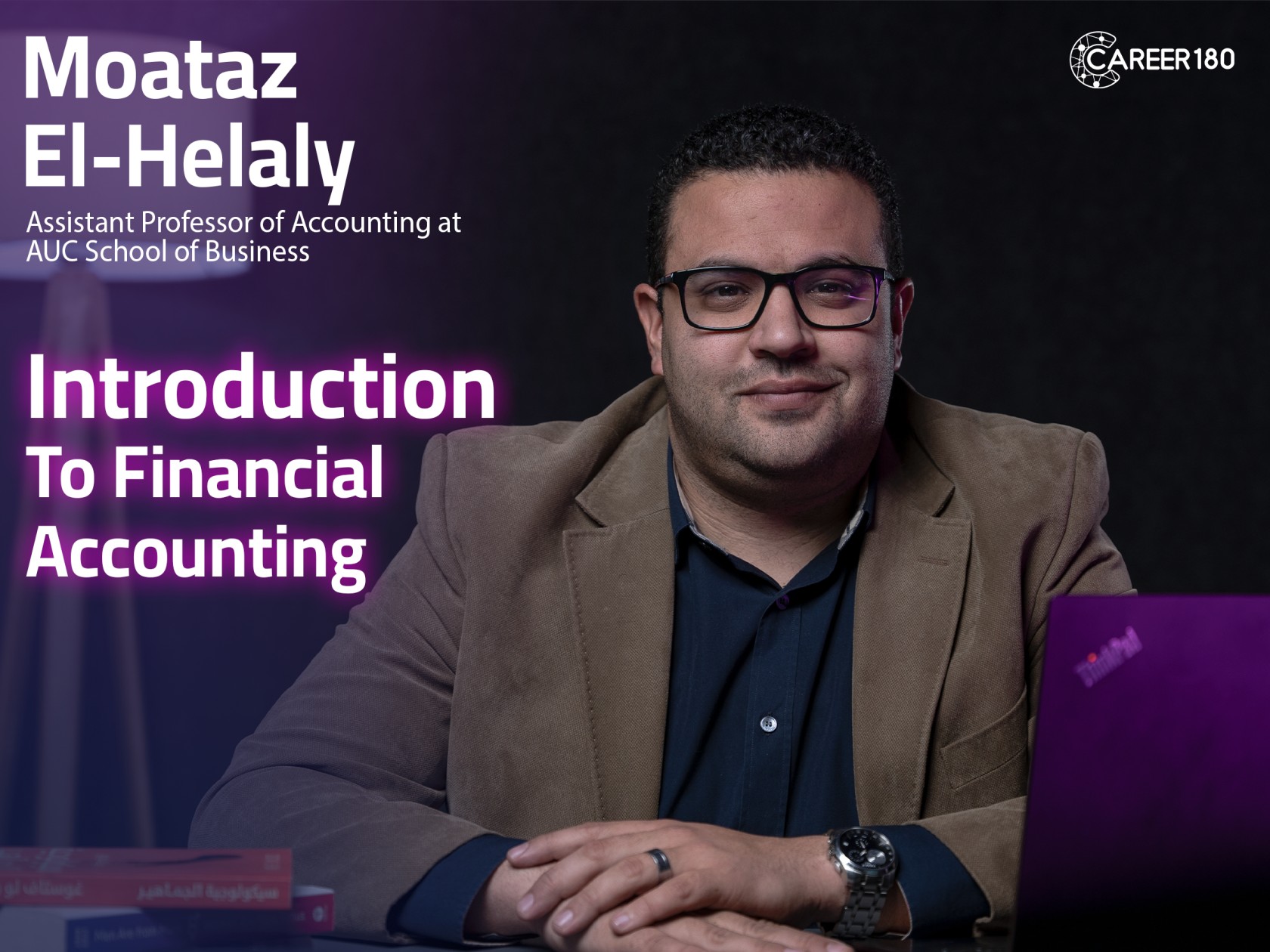
Course 9
In this course you will learn:
- Introduction to Accounting: Understand accounting principles and the accounting equation.
- Financial Statements: Learn to interpret and analyze different types of financial statements.
- Recording Financial Transactions: Master debit and credit rules for accurate transaction recording.
- Adjusting Process: Explore the adjusting process to ensure proper recognition of revenues and expenses.
- Accounting Cycle: Gain a comprehensive understanding of the complete accounting cycle.
- Ratio Analysis: Learn to calculate and interpret financial ratios for performance evaluation.
- Stock Market Ratios: Assess investment potential using key stock market ratios.
- Financial Decision-Making: Develop essential skills for making informed financial decisions.
-
Intro
1 minute 53 seconds -
Accounting as the Language of Business
10 minutes 39 seconds -
The Accounting Equation
5 minutes 15 seconds -
The Financial Statements
9 minutes 26 seconds -
Transaction Analysis
5 minutes 31 seconds -
Double Entry Accounting
10 minutes 12 seconds -
Recording Transactions
4 minutes 52 seconds -
Trial Balance
4 minutes 7 seconds -
Accrual Accounting
3 minutes 54 seconds -
The Adjusting Process
4 minutes 29 seconds -
Prepaid Expenses
7 minutes 4 seconds -
Accrued Expenses
4 minutes 22 seconds -
Depreciation
7 minutes 4 seconds -
Preparing Financial Statement
5 minutes 22 seconds -
Closing Entries
8 minutes 46 seconds -
Financial Ratios
1 minute 35 seconds -
Ability to Pay Current Liabilities
2 minutes 11 seconds -
Inventory and Receivable Ratios
4 minutes -
Ability to Pay Debts
3 minutes 57 seconds -
Profitability Ratios
4 minutes 14 seconds -
Share Investments
3 minutes 51 seconds
Subscriptions
Start watching our recorded courses in different fields with our great experts
1 Month Subscription
Benefits
- Full access to all courses
- Full access to material of courses
- Engage with course instructors
- Get certificate of completion
1 Year
Benefits
- Full access to all courses
- Full access to material of courses
- Engage with course instructors
- Get certificate of completion
3 Months
Benefits
- All one month subscription perks
- Access for three months
- Access for 3 users